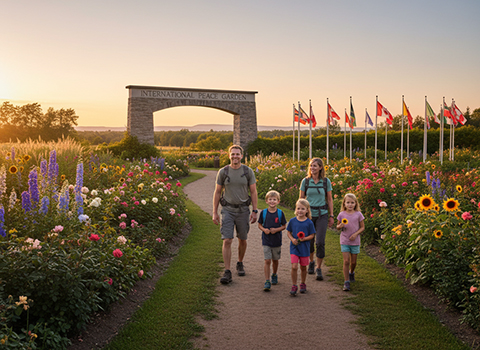
Join me as we hike the top
Urban Trails of North Dakota
Urban hiking in North Dakota often centers on prairie trails, riverbanks, and wide-open parklands near Fargo or Bismarck. The landscape feels spacious and quiet, with dramatic skies and rolling terrain. Urban hiking here is peaceful and expansive.
Theodore Roosevelt National Park (Painted Canyon Trails) – Medora
Theodore Roosevelt National Park is North Dakota’s most iconic hiking destination, located in the Badlands near Medora. Famous for its painted cliffs, rugged buttes, prairie wildlife, and dramatic canyon landscapes, the park offers hikers an experience unlike anywhere else in the Great Plains. Despite being in a sparsely populated region, it remains the crown jewel near-urban escape for western North Dakota communities and travelers seeking the state’s most breathtaking scenery.
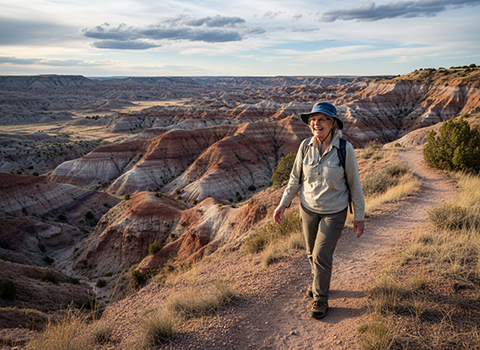
The Painted Canyon area provides some of the most accessible hiking opportunities, with short trails and overlooks that immediately immerse hikers in the Badlands terrain. Hikers experience rolling ridges, eroded clay hills, and sweeping views across colorful layered landscapes. The terrain is moderate, with sandy footing and open exposure beneath North Dakota’s vast sky.
The highlight is the extraordinary Badlands panorama — endless buttes and canyons stretching across the horizon, especially stunning at sunrise and sunset when the cliffs glow in warm color. Wildlife sightings are common, including bison, wild horses, and prairie dogs. Autumn brings crisp air and golden prairie tones, while spring offers blooming wildflowers. Theodore Roosevelt National Park is North Dakota’s crown jewel near-urban hike, offering unforgettable Badlands wilderness beauty.
Maah Daah Hey Trail (Medora Segments) – Badlands
Hiking the Griffith Park Trails offers one of the most diverse and scenic urban hiking experiences in Los Angeles. Spanning thousands of acres in the eastern Santa Monica Mountains, Griffith Park feels remarkably wild for a park surrounded by dense urban development. Trails climb from chaparral-covered hillsides to panoramic ridgelines, providing expansive views of downtown Los Angeles, the Hollywood Sign, and the Pacific Ocean on clear days.
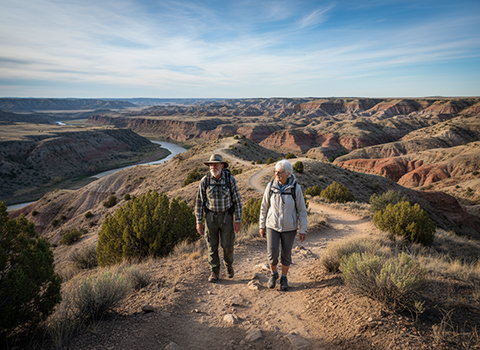
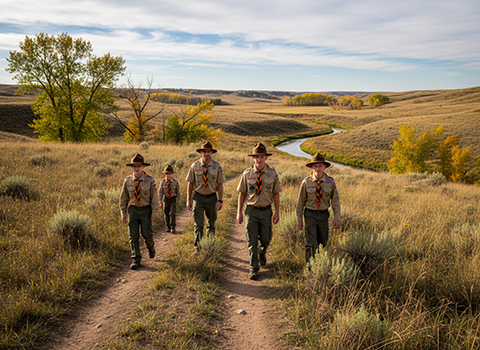
The Maah Daah Hey Trail is one of the longest and most famous hiking routes in the Midwest, stretching through North Dakota’s Badlands and prairie landscapes. While the full trail spans over 140 miles, near-urban segments around Medora provide some of the best accessible day hiking opportunities in the state. This trail showcases the rugged beauty of western North Dakota, with rolling ridges, deep draws, and wide-open wilderness.
The highlight of hiking the Maah Daah Hey is the sense of endless open space and rugged Badlands character. Sunset hikes are breathtaking, with golden light spreading across ridgelines and distant cliffs. Spring brings prairie wildflowers, while autumn offers cool clear days perfect for long hikes. Maah Daah Hey Trail segments represent North Dakota near-urban hiking at its finest: wild, rugged, and deeply scenic in the Badlands.
Fort Abraham Lincoln State Park Trails – Bismarck area
Fort Abraham Lincoln State Park is one of North Dakota’s best near-urban hiking destinations, located just south of Bismarck along the Missouri River. This park combines rolling river bluffs, prairie scenery, and deep historical significance, preserving reconstructed military fort sites and Mandan earthlodges. Hiking here offers a unique experience where natural beauty and cultural heritage come together in one of the most accessible outdoor escapes near the state capital.
The trail system includes easy to moderate routes that wind through prairie hills, along bluff edges, and down toward river valley landscapes. Hikers experience open grassland scenery with expansive skies, along with wooded patches near the Missouri River corridor. The terrain is gently rolling, making it approachable for most hikers while still providing scenic variety and elevation changes uncommon in the plains.
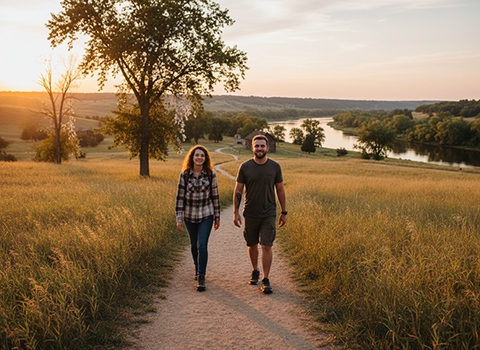
The highlight of hiking Fort Abraham Lincoln is the blend of historic atmosphere and sweeping river-bluff views. Sunset hikes are especially beautiful, with golden light spreading across prairie hills and the Missouri River below. Autumn brings warm grassland tones, while spring offers fresh greenery and wildflower blooms. Fort Abraham Lincoln State Park is one of North Dakota’s finest near-urban hikes, offering prairie bluff scenery and heritage close to Bismarck.
Sheyenne National Grassland Trails – Eastern ND
Sheyenne National Grassland is one of North Dakota’s most unique near-urban hiking destinations, located in the southeastern part of the state. This protected landscape preserves rare tallgrass prairie remnants, rolling sand dunes stabilized by vegetation, and diverse wildlife habitats. Unlike the Badlands of the west, Sheyenne offers hikers an immersive prairie hiking experience, showcasing what much of the Great Plains once looked like before widespread settlement.
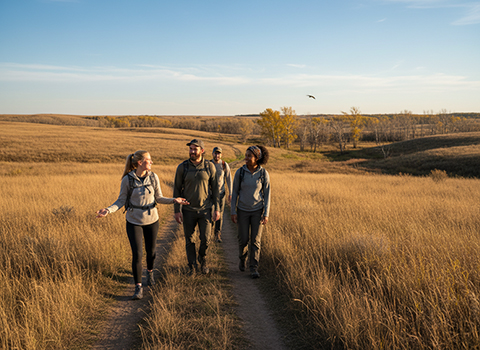
The hiking experience here includes easy to moderate grassland trails winding through open prairie, sandy ridge terrain, and scattered woodland patches along the Sheyenne River corridor. Hikers enjoy wide horizons, breezy grasslands, and abundant birdlife, making the area especially popular for nature observation. The terrain is gentle but feels expansive and wild, offering a true sense of prairie solitude.
The highlight of hiking Sheyenne National Grassland is the rare ecosystem itself — tall grasses swaying under endless sky, wildflowers blooming in spring and summer, and migratory birds filling the landscape with life. Autumn brings golden prairie color, while summer sunsets create breathtaking open-sky scenery. Sheyenne National Grassland represents North Dakota near-urban hiking at its most distinctive: wide-open prairie wilderness in the eastern part of the state.
Sertoma Park & Missouri River Greenway Trails – Bismarck/Mandan
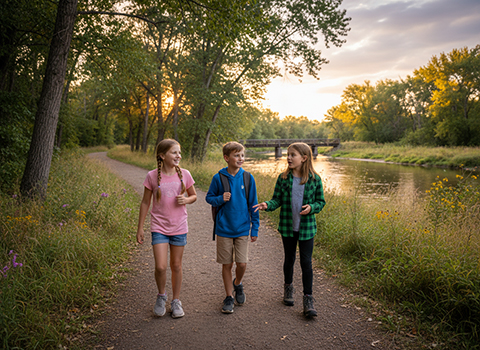
The Missouri River Greenway trail system through Sertoma Park is one of North Dakota’s best true urban hiking and walking experiences, located in the Bismarck–Mandan area. Following the Missouri River, this trail corridor provides city residents with scenic riverside paths, shaded parkland, and open prairie views within minutes of downtown. In a state known for wide open landscapes, the Missouri River corridor offers one of the most important natural green refuges in the capital region.
The trail network is mostly flat and accessible, making it ideal for casual hikers, walkers, runners, and cyclists. Hikers travel along riverbanks, through grassy park areas, and beneath cottonwood trees that provide shade and seasonal beauty. Wildlife such as birds, deer, and river mammals are often seen along the corridor, adding natural richness to the urban setting.
The highlight of hiking these trails is the calming presence of the Missouri River paired with expansive prairie skies. Sunrise walks are especially peaceful, with soft light reflecting across the river, while evening hikes offer beautiful sunsets over the water. Autumn brings golden cottonwoods lining the banks, while spring offers fresh greenery and migrating birdlife. Sertoma Park and the Missouri River Greenway represent North Dakota urban hiking at its finest: accessible, scenic, and deeply restorative in the heart of the capital region.
Turtle River State Park Trails – Grand Forks area
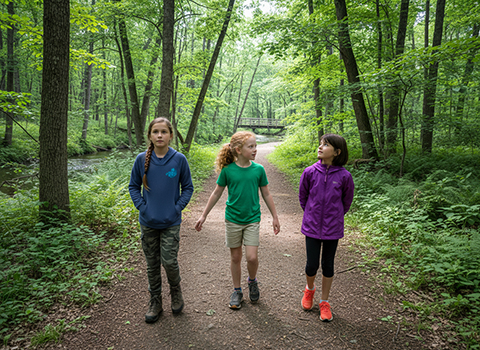
Turtle River State Park is one of North Dakota’s finest near-urban hiking destinations in the eastern part of the state, located west of Grand Forks. Unlike the open prairie landscapes many associate with North Dakota, Turtle River preserves a surprising forested river valley environment with rolling hills, dense woodland, and scenic creek corridors. This makes it one of the most beloved hiking escapes for communities in the Grand Forks region.
The trail system includes easy to moderate routes winding through hardwood and aspen forest, along the Turtle River, and across gentle hills that feel unusually rugged for eastern North Dakota. Hikers enjoy shaded paths, peaceful river scenery, and wildlife-rich habitats that provide an immersive woodland hiking experience. The terrain is approachable but varied, offering both relaxing walks and more energetic climbs.
The highlight of hiking at Turtle River State Park is the unexpected forest-and-valley beauty so close to the Red River plains. Autumn is especially spectacular, with vibrant foliage filling the river valley in brilliant color. Spring brings wildflowers and fresh greenery, while winter transforms the park into a quiet snowy hiking destination. Turtle River State Park is one of North Dakota’s crown jewel near-urban hikes, offering woodland immersion close to Grand Forks.
Fargo Red River Greenway & Urban Trail System – Fargo
The Red River Greenway trail system is one of North Dakota’s best true urban hiking and walking experiences, running through Fargo along the Red River corridor. This network of paved and natural paths provides city residents with scenic riverside walking, wooded park sections, and peaceful open green spaces within an urban environment. In a region known for flat plains, the river corridor creates a vital natural refuge for outdoor recreation right in the heart of Fargo.
The trail system is flat, accessible, and ideal for casual hikers, walkers, runners, and cyclists. Hikers travel beneath cottonwood trees, past wetlands and riverbanks, and through connected parks that provide variety along the route. Wildlife such as birds, ducks, and small river animals are often present, making the greenway a pleasant nature experience despite its city setting.
The highlight of hiking Fargo’s Red River Greenway is the blend of calm river scenery and urban accessibility. Sunrise walks can be especially peaceful, with mist rising over the river and soft light reflecting on the water. Autumn brings golden foliage along the corridor, while spring offers fresh greenery and migratory birds. The Fargo Greenway represents North Dakota urban hiking at its finest: scenic, restorative, and deeply connected to the river landscape within the city.
Lake Sakakawea Shoreline Trails – Western ND
Lake Sakakawea is one of North Dakota’s most scenic outdoor destinations, stretching across western North Dakota as a massive reservoir on the Missouri River. The lake’s shoreline offers excellent near-urban hiking opportunities for communities such as Minot, Williston, and surrounding areas, with trails that combine water views, prairie hills, and expansive big-sky scenery. Hiking near Lake Sakakawea provides a unique blend of Great Plains openness and lakeshore tranquility.
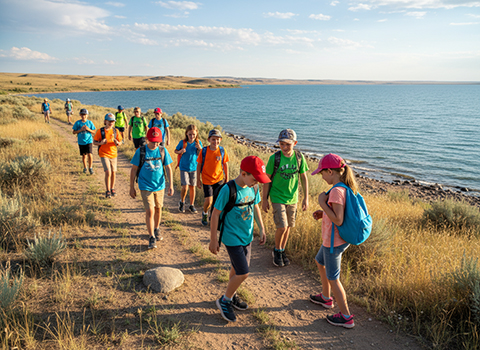
Trail experiences around the lake are generally easy to moderate, winding through prairie grasslands, rocky shoreline sections, and rolling hills above the water. Hikers enjoy wide horizons, birdlife, and the peaceful presence of the lake stretching into the distance. The terrain feels open and expansive, offering a different kind of scenic reward than forests or mountains.
The highlight of hiking Lake Sakakawea is the combination of water-and-prairie landscapes under North Dakota’s vast sky. Sunset hikes are especially breathtaking, with golden light reflecting across the lake and illuminating rolling grassland hills. Autumn brings warm prairie tones, while summer offers refreshing breezes off the water. Lake Sakakawea shoreline trails represent North Dakota near-urban hiking at its most serene and expansive, offering lakeside wilderness beauty in the west.
Sully Creek State Park Trails – Medora region
Sully Creek State Park is one of North Dakota’s most underrated near-urban hiking destinations, located near Medora in the heart of the Badlands region. Adjacent to Theodore Roosevelt National Park, Sully Creek offers hikers a quieter, more intimate experience of Badlands terrain with rolling prairie hills, rugged draws, and abundant wildlife. Despite being close to the park’s more famous trails, Sully Creek provides a peaceful escape with the same dramatic western North Dakota atmosphere.
The trail system includes easy to moderate routes through open grasslands and gently eroded Badlands hills. Hikers experience wide prairie horizons, rugged clay ridges, and occasional canyon-like dips that create constant scenic variety. Wildlife sightings are common, including bison, deer, and prairie birds, as the park lies within an important natural habitat corridor.
The highlight of hiking Sully Creek is the sense of solitude and open Badlands wilderness just outside Medora. Sunset hikes are especially breathtaking, with warm light igniting the rolling hills and distant buttes. Spring brings prairie wildflowers, while autumn offers crisp air and golden grassland tones. Sully Creek State Park is one of North Dakota’s finest near-urban hikes, offering quiet Badlands beauty close to the state’s most iconic landscapes.
International Peace Garden Trails – Turtle Mountains
The International Peace Garden is one of North Dakota’s most unique near-urban hiking destinations, located in the Turtle Mountains along the border with Canada. This extraordinary park celebrates peace and friendship between the United States and Canada while offering beautiful forest, lake, and garden trails unlike much of the surrounding prairie landscape. The Turtle Mountains region provides one of North Dakota’s most wooded and scenic environments, creating a refreshing contrast to the state’s open plains.
The trail system includes easy woodland walks through mixed forest, along small lakes, and around the beautifully maintained botanical gardens. Hikers experience shaded paths, peaceful water views, and abundant birdlife in a setting that feels serene and contemplative. The terrain is gentle and accessible, making the Peace Garden ideal for relaxed hiking and nature walks.
The highlight of hiking here is the combination of forest tranquility and the park’s symbolic cultural atmosphere. Autumn brings rich foliage color to the Turtle Mountains woods, while spring offers blooming gardens and fresh greenery. Morning walks are especially peaceful, with soft light filtering through trees and reflections on lake surfaces. The International Peace Garden is one of North Dakota’s most distinctive near-urban hiking destinations, offering woodland beauty and a truly unique cross-border setting.